

By La Tabla / Data Journalism Platform – December 3, 2025

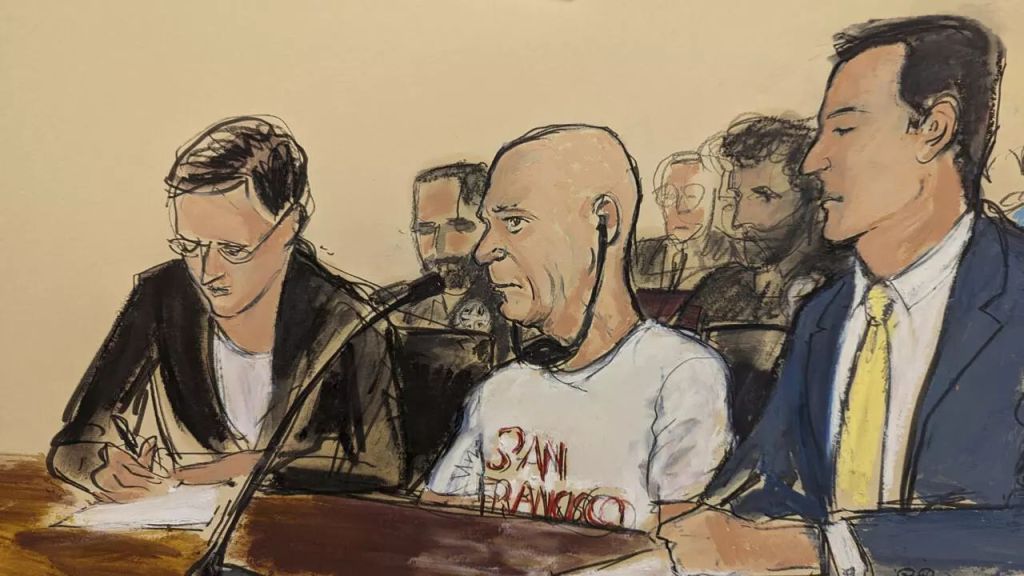
Hugo Carvajal Barrios, once one of the most powerful figures in Venezuela’s intelligence apparatus, now sits in a U.S. prison after pleading guilty to narco-terrorism charges. His public letter—framed as a confession—describes a multifaceted war waged by the Venezuelan regime against the United States. But a close comparison between his personal timeline and the events he claims to have witnessed reveals fundamental chronological inconsistencies.
The letter, filled with dramatic accusations about operations allegedly carried out after 2019 (including the deployment of the Tren de Aragua gang to U.S. soil), describes events that Carvajal could not have directly participated in or observed. By that time, he had already broken with the Maduro regime, fled Venezuela, and was either in hiding, detained, or facing extradition.


This raises serious doubts about the authenticity and intent of the letter. Was Carvajal fabricating details to negotiate a lighter sentence? Or was the document shaped—perhaps even co-authored—by federal authorities to align with a geopolitical narrative that casts Nicolás Maduro as an active narco-terrorist threat?

📅 Timeline of Access and Authority
Understanding Carvajal’s institutional trajectory is key to evaluating the credibility of his claims:
– July 2004 – Dec. 2011: Director of Military Intelligence (DIM) under Hugo Chávez.
– April 2013 – Jan. 2014: Director of Military Counterintelligence (DGCIM) under Nicolás Maduro.
– Jan. – Sept. 2014: Consul General of Venezuela in Aruba.
– 2015: Elected to the National Assembly.
– 2016 – 2019: Served as deputy, though distancing from the regime had begun.
– 2017: Publicly broke with Maduro, denouncing repression and rejecting the Constituent Assembly.
– Feb. 2019: Released a video recognizing Juan Guaidó as interim president.
– April 2019: Expelled from the armed forces and accused of treason. Fled to Spain and was arrested.
– July 2023: Extradited to the U.S.
– June 2025: Pleaded guilty to narco-terrorism and drug trafficking in federal court.
🔍 Claim vs. Context: Four Key Contrasts
1. High-Level Drug Operations (2006–2008)
– Claim: Personally coordinated multimillion-dollar cocaine shipments, including the infamous DC-9 loaded with 5.6 tons.
– Position: Director of Military Intelligence.
– Analysis: Credible. This period aligns with his role and with U.S. Justice Department allegations.
2. Smartmatic Electoral Manipulation
– Claim: Appointed the head of IT at Venezuela’s electoral council and oversaw manipulation via Smartmatic software.
– Historical Context: In 2017, Smartmatic publicly denounced vote inflation. Maduro severed ties with the company.
– Position: By 2017, Carvajal was a dissident deputy with no direct influence over electoral systems.
– Analysis: Weak. He may have known the system’s vulnerabilities from earlier years, but his claim to witness manipulation post-2017 lacks institutional grounding.
3. Exporting Tren de Aragua to the U.S.
– Claim: The regime exploited Biden’s border policies to send gang operatives to the U.S. with criminal orders.
– Position (2021–2023): Carvajal was either a fugitive, detained in Spain, or in U.S. custody.
– Analysis: Implausible. He had no access to internal operations and could not have witnessed or coordinated such actions.
4. Espionage with Russia and Iran
– Claim: Russian intelligence proposed tapping submarine cables; warned Maduro in 2015 about a listening post on La Orchila.
– Position: By 2015, Carvajal was a legislator, long removed from intelligence roles.
– Analysis: Mixed. He may have retained informal knowledge from prior years, but operational details post-2014 are speculative at best.
🧩 A Narrative Built to Fit
The inconsistencies suggest a two-tiered narrative:
1. The credible core: His accounts from 2004–2014, when he held top intelligence posts, align with documented investigations and lend the letter an air of legitimacy.
2. The strategic extension: Claims about events after 2019—especially the alleged export of criminal networks—appear tailored to reinforce a U.S. domestic security narrative. These additions echo the “criminal invasion” rhetoric promoted during Trump’s presidency and sustained thereafter.
In this light, Carvajal’s letter is not merely a confession. It’s a political artifact. Its most sensational and timely claims lack grounding in his actual experience and raise the possibility that the document was crafted to serve a broader agenda: portraying Maduro not just as a dictator, but as an active, transnational threat to U.S. national security.
His testimony about past crimes may hold evidentiary value. But his account of Venezuela’s current operations must be scrutinized with caution and verified independently. The story of “El Pollo” is ultimately that of a witness whose credibility faded as his access to power disappeared.